Serving Texas + Nationwide

CYBER LABS

Give students an environment where cybersecurity becomes real.

Our cyber labs give students hands-on access to realistic Windows, networking, cloud, security, and monitoring environments where they can learn by building, investigating, defending, troubleshooting, and fixing technology themselves.

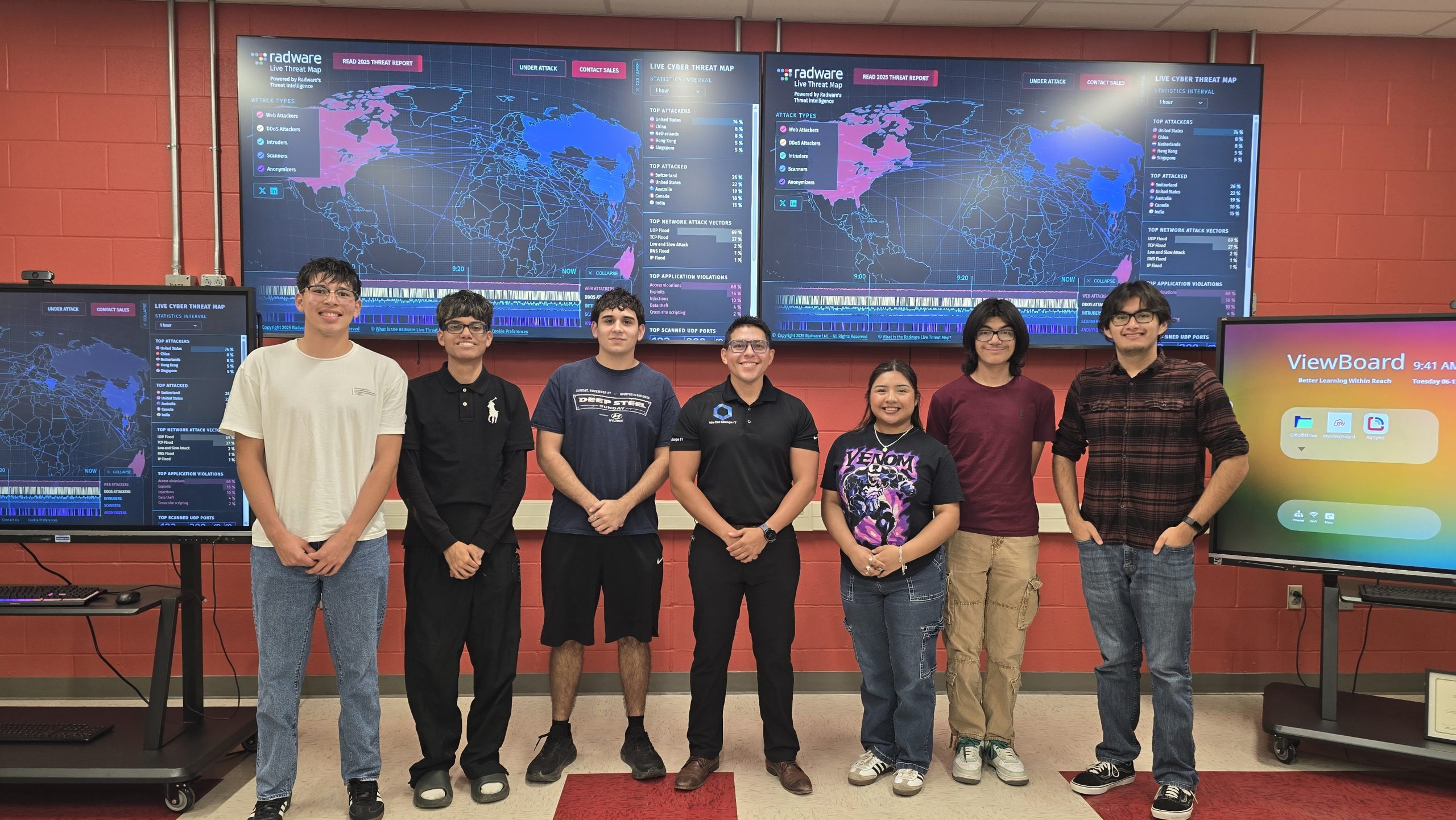
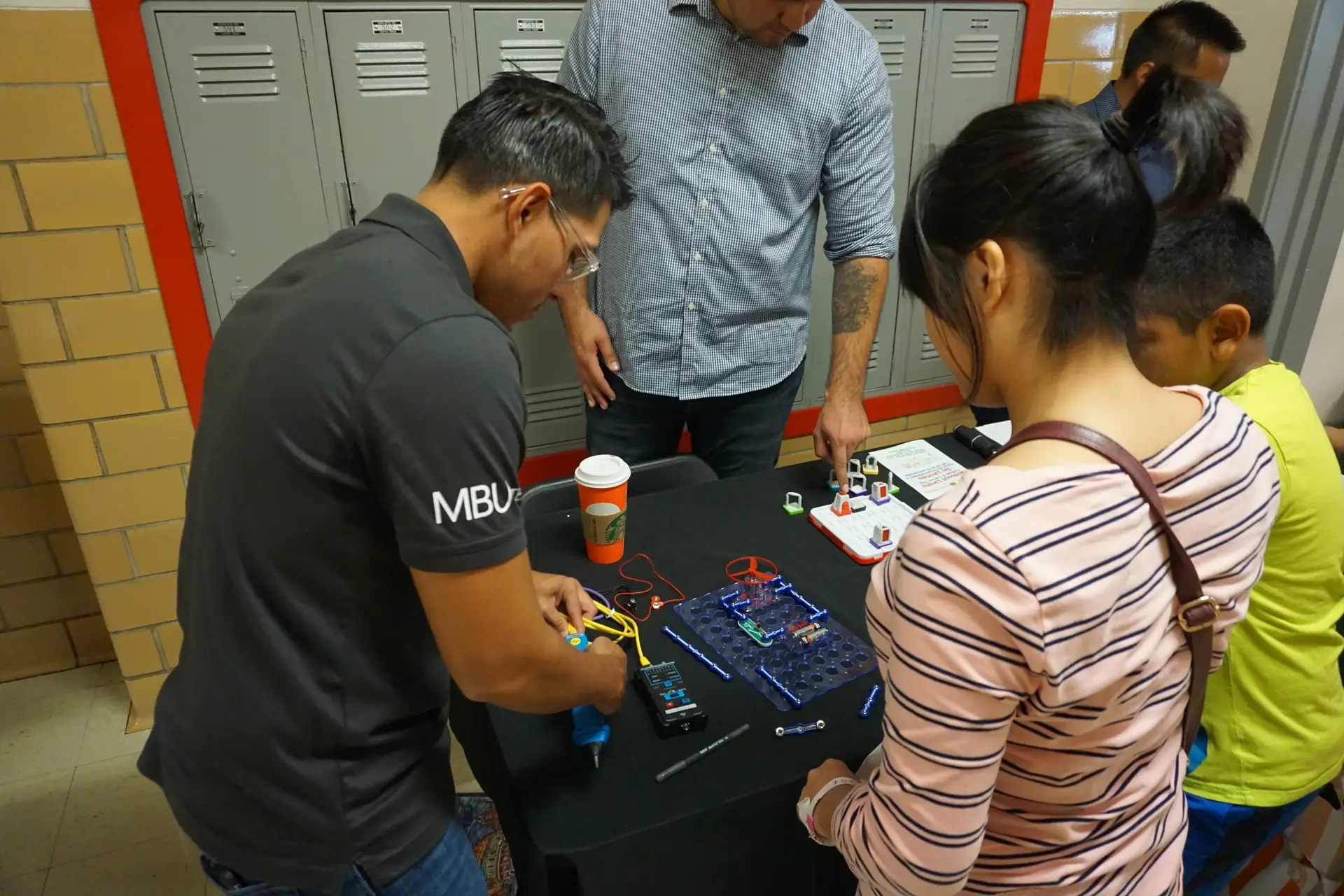
Hands-on We Can Change IT technology workshop showing participants using cybersecurity and technology equipment.

Cybersecurity makes more sense when students can touch the technology.

Move beyond passive slides and conceptual lectures. Our interactive labs provide controlled, isolated environments where students configure systems, investigate security scenarios, practice defensive techniques, and learn how networks behave under realistic conditions.

Build

Configure Windows and networked lab systems, practice firewall and access-control changes, and build isolated virtual environments that reinforce secure configuration and troubleshooting skills.

Investigate

Review security event logs, analyze lab traffic and system telemetry, and investigate simulated security activity to understand what happened, how it was detected, and what should be done next.

Remediate

Fix active system flaws, close critical vulnerabilities, deploy targeted firmware patches, and harden production systems to confidently defeat ongoing threat campaigns.

A real technology environment built for learning.

Gain hands-on expertise with actual network architectures and high-fidelity simulations. We bridge the gap between abstract theory and operational reality, preparing you for modern security challenges.

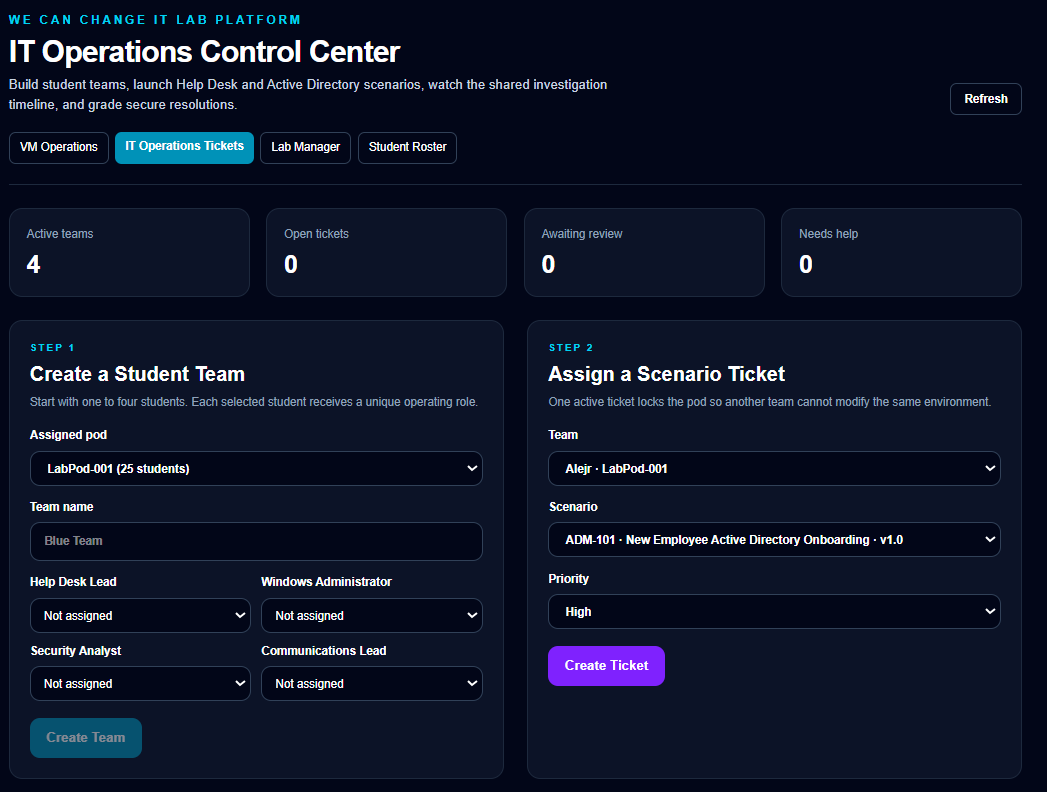
We Can Change IT IT Operations Control Center for creating student teams and assigning Active Directory and help-desk scenario tickets.

Our platform uses isolated virtual environments designed for hands-on training. Students can practice configuration, defensive testing, troubleshooting, and approved security exercises without using production systems. Lab environments can be reset or recovered so instructors can support experimentation and repeatable learning.

Learn the environments businesses actually use.

Gain core administrative competencies inside simulated corporate networks. WCCIT Cyber Labs guide you through foundational and enterprise-level concepts using actual, live-instance business infrastructure.

Windows Workstations

Windows Server

Active Directory

Users & Groups

Permissions & Access

Group Policy Concepts

Students participating in a hands-on We Can Change IT cybersecurity lab activity using real technology.

Cybersecurity starts with understanding how systems communicate.

Before you can secure a network, you must speak its language. Explore the core protocols, services, and structural boundaries that form the bedrock of defensive cybersecurity architecture.

WCCIT ACTIVE LAB: NETWORK VISUALIZATION

● SIMULATION ONLINE
Secure Host
IP: 10.0.10.15 (VLAN 10)
Unicast Route
NGFW Router
GW: 10.0.10.1 (DHCP Srv)
DNS Resolution
Core Nameserver
DNS: 8.8.8.8 / 1.1.1.1

IP Addressing

The fundamental logical coordinates of any network node. Understand IP allocation protocols, IPv4 structured headers, dynamic subnet configurations, and advanced IPv6 transition rules.

DNS (Domain Name System)

Translates domains into system-routable IP addresses. Learn how resolution sequences, records, zone transfers, dynamic cache mechanisms, and modern DNSSEC prevent malicious spoofing.

DHCP Protocol

Automates IP assignments dynamically. Dive deep into the discovery, offer, request, and acknowledgment sequences (DORA) alongside securing networks from DHCP starvation attacks.

Routing & Connectivity

Establishes path determination across logical segments. Learn how border gateways, dynamic routing tables, structural hops, and packet routing matrices operate in high-availability environments.

VLANs & Segmentation

Limits broadcast domains to restrict lateral movement. Explore tag-based logical routing (802.1Q), isolating threat landscapes, and enforcing hard access-control parameters at Layer 2.

Network Troubleshooting

Identify and isolate system failure modes. Master diagnostic utilities like packet sniffers, tcpdump filters, route traces, and secure lookup structures to maintain critical infrastructure uptimes.
Finding a vulnerability is only the beginning.

Uncovering security flaws is a critical first step, but real protection comes from a structured lifecycle. Discover how we guide you from initial detection through to validation.

01

Discover

Locate endpoints and map active attack vectors.

02

Understand

Analyze systemic impact and root vulnerability causes.

03

Prioritize

Score risks dynamically based on threat context.

04

Remediate

Apply strategic code fixes and configurations.

05

Validate

Re-test continuously to ensure permanent patches.


Core Vulnerability Domains

Explore real-world vectors taught across our technical labs.

Outdated Software

Mitigate risks associated with unpatched components, outdated system dependencies, and insecure legacy APIs.

Broken Authentication

Detect authentication bypasses, weak token parameters, and missing multi-factor constraints across environments.

Injection Vectors

Uncover SQLi, XSS, and command injection patterns while designing query parameterization protocols.

Teach students to investigate what happened—not just memorize definitions.

Move beyond basic multiple-choice theory. Put your students in the driver's seat with modern, fully-interactive learning environments designed to mirror actual enterprise network challenges.

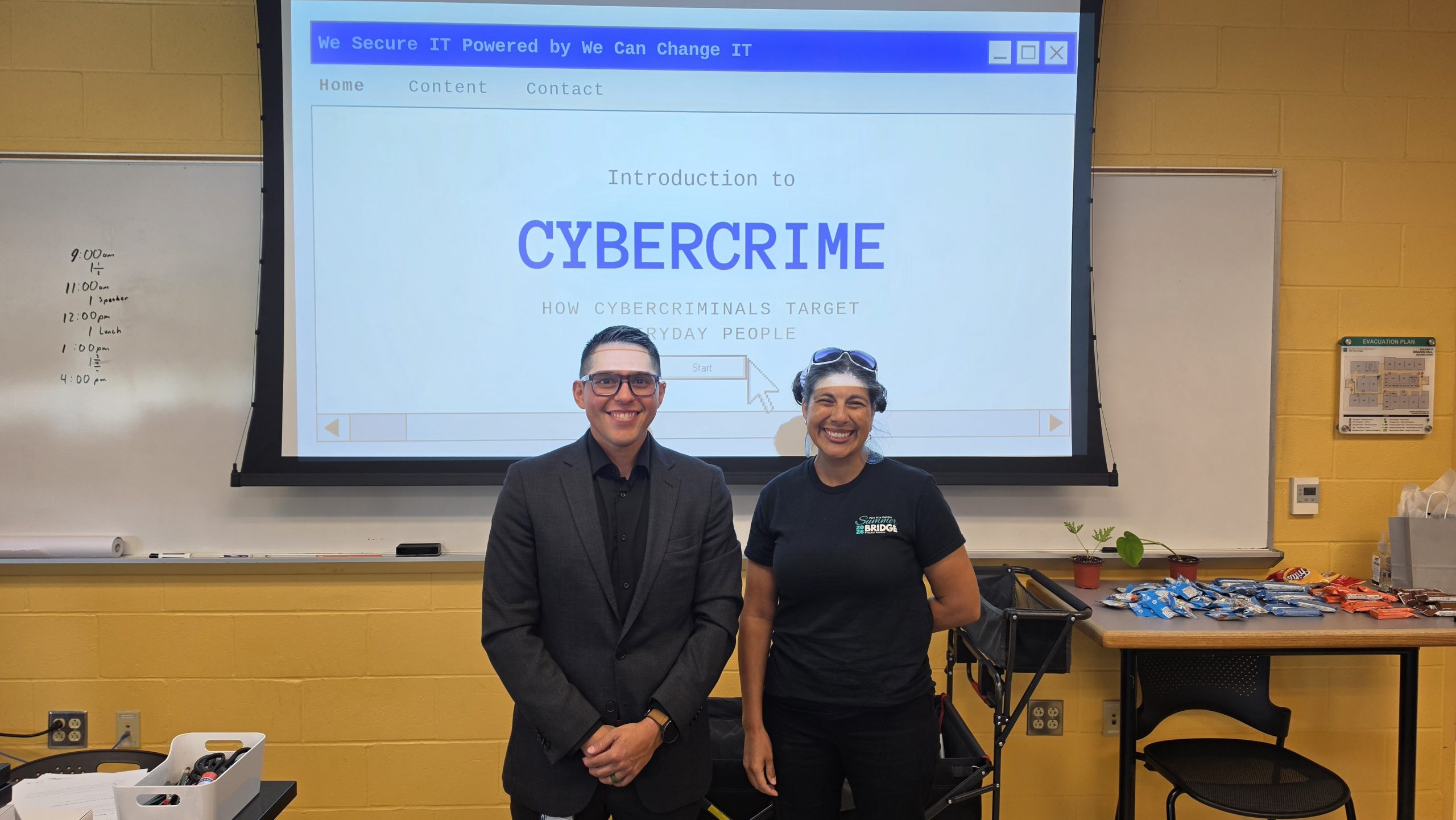
We Can Change IT delivering a cybersecurity presentation in a classroom and training environment.

Simulated Warfare

Understand both sides of the problem.

To defeat an adversary, you must think like one. Our advanced cyber labs provide immersive, hands-on environments for both offensive exploitation and robust defensive operations.

Red Team Focus

Offensive Security & Penetration

Learn the tools and methods needed to breach perimeters, exploit systemic vulnerabilities, and test security posture through structured, ethical attacks.

Blue Team Focus

Defensive Operations & Hardening

Master monitoring, digital investigation, and systems engineering to design bulletproof networks that actively detect, contain, and neutralize modern threats.


Important Policy Notice: All laboratory exercises and simulated cyber attack/defense drills are strictly conducted within isolated, fully authorized sandbox hypervisor environments. External testing or deployment on production servers is strictly prohibited.

Interactive Hardware Training

Wireless security is easier to understand when students can see the technology in front of them.

Wireless Authentication

Explore standard enterprise mechanisms, WPA3 verification layers, and secure RADIUS environments.

Encryption Concepts

Demystify TKIP, CCMP, and GCMP protocols by capturing and analyzing handshakes in a secure ecosystem.

Network Segmentation

Isolate SSIDs, configure secure VLAN mapping rules, and design resilient network structures.

Authorized Wireless Assessment

Practice ethical auditing, map active signals, and identify rogue devices in controlled field studies.

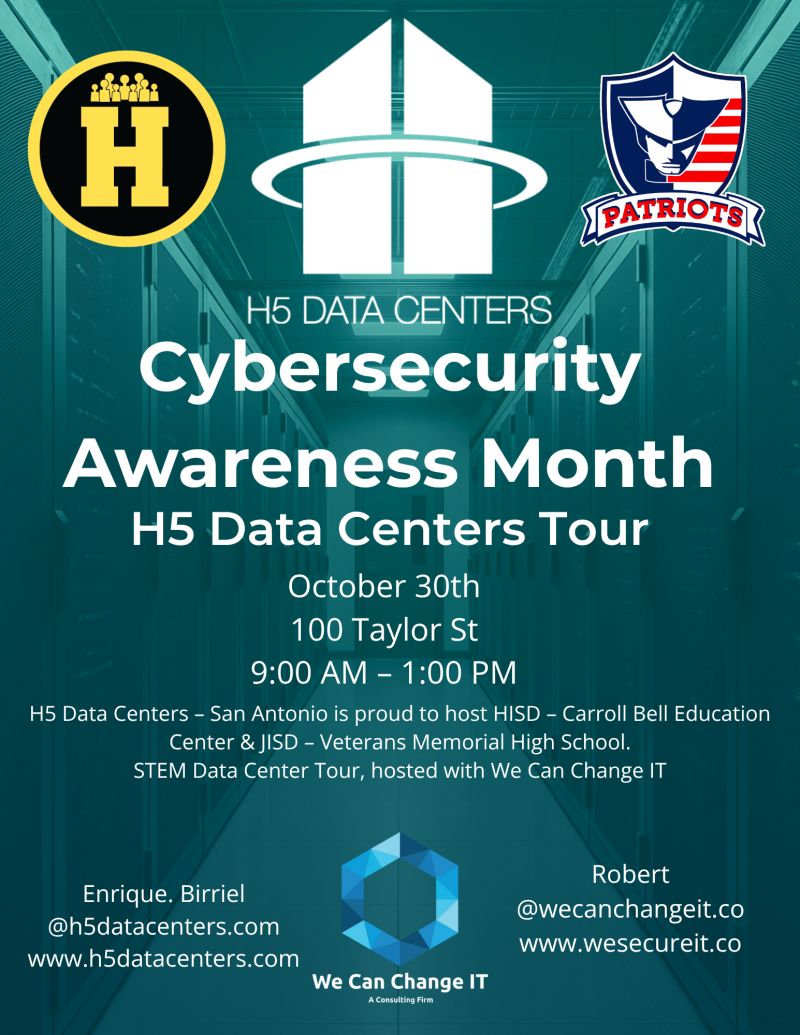
Hands-on data center tour during a We Can Change IT student technology program.