PENETRATION TESTING

Find vulnerabilities before someone else does.

Our penetration testing services evaluate how weaknesses in your environment could be discovered, combined, or exploited within an authorized scope—then turn those findings into practical remediation guidance.

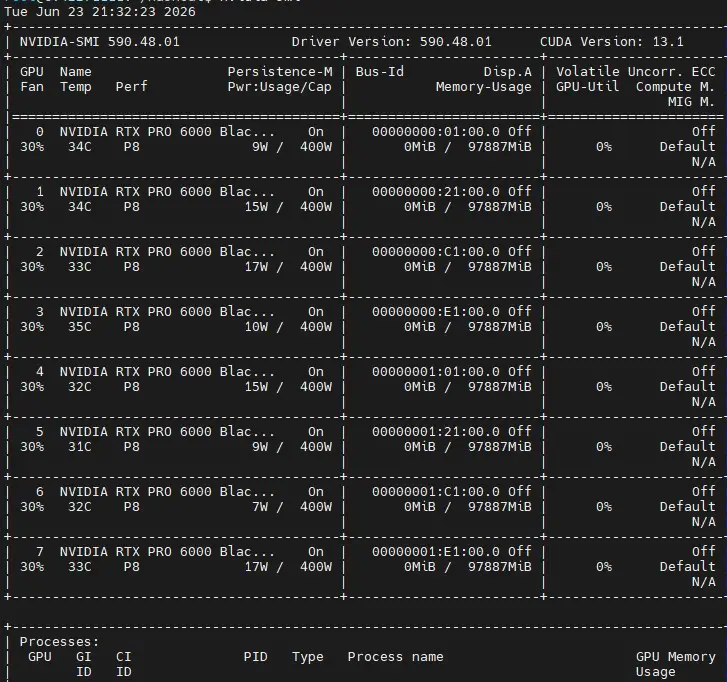
We Can Change IT presenting findings from a client penetration testing and security assessment engagement.

Cybersecurity Capabilities

Testing built around your environment.

External Penetration Testing

Assess internet-facing assets, applications, and networks within an authorized scope to identify meaningful external exposure and attack paths.

Internal Penetration Testing

Evaluate corporate networks under the assumption that an attacker has gained a foothold, mapping out lateral movement paths and domain exposure risks.

Wireless Security Testing

Detect unauthorized access points, outdated encryption algorithms, and rogue networks that could compromise local device communications.

Web Application Testing

Manual and automated testing of authorized web applications and APIs for common OWASP Top 10 risks, configuration issues, and business-logic weaknesses.

OSINT & Exposure Assessment

Discover leaked corporate credentials, exposed source code, shadow infrastructure, and open-source intelligence leaks that invite exploitation.

Targeted Security Testing

Targeted testing designed around approved business systems, technical constraints, and specific security questions that need to be answered.

VULNERABILITY VECTOR ANALYSIS

Security weaknesses rarely exist in isolation.

An entry point in one vector often serves as the leverage needed to move laterally. True resilience requires mapping, securing, and continuous auditing across all technical domains.

Network Exposure

Identity & Access

Endpoints

Applications

Wireless

Public Exposure

Rules of Engagement

Controlled testing starts with clear rules.

Professional security testing requires explicit guidelines that support safety, transparency, and operational control. We work within documented authorization, approved scope, and agreed rules of engagement before testing begins.

Written Authorization

Written authorization documents who may approve the work, which systems are in scope, and the testing boundaries that apply before active testing begins.

Defined Scope

Strict technical boundaries mapping out the exact target subnets, host IP addresses, and excluded systems beforehand.

Testing Windows

Testing windows can be scheduled around operational constraints to reduce disruption and coordinate higher-impact activities with the client.

Safety Boundaries

Detailed rules of engagement that define strict boundaries for high-risk exploits to ensure production environment health.

Communication Flow

Structured check-ins and immediate escalation protocols for discovered high-risk flaws, keeping leadership informed.

Evidence Handling

Encrypted secure data logging, controlled evidence sharing, and systematic file destruction after reporting completion.

OUR METHODOLOGY

From scope to remediation.

A systematic, rigorous, and transparent testing process designed to thoroughly evaluate your infrastructure, validate active risks, and secure your digital perimeter.

Get Started

01

Scope

Define boundaries, rules of engagement, specific testing targets, and critical compliance requirements.

02

Reconnaissance

Gather initial intelligence through passive and active mapping to identify host configurations and architecture.

03

Discovery

Scan networks and systems to discover active ports, running services, and unpatched configurations.

04

Validation

Manually verify potential exploits to confirm exposure and reduce false positives.

05

Analysis

Evaluate potential business impact, structural risk severity, and chain-exploit paths.

06

Reporting

Deliver structured, actionable summaries outlining clear findings alongside precise remediation instructions.

07

Retest

Verify resolved issues to confirm patches have been successfully applied and systems are secure.

What does your organization look like from the internet?

From an attacker's perspective, your public perimeter is the first line of defense—and the most exposed. External penetration testing maps your digital footprint to discover exactly what malicious actors see, identifying critical security gaps before they can be exploited.

Discuss an External Test
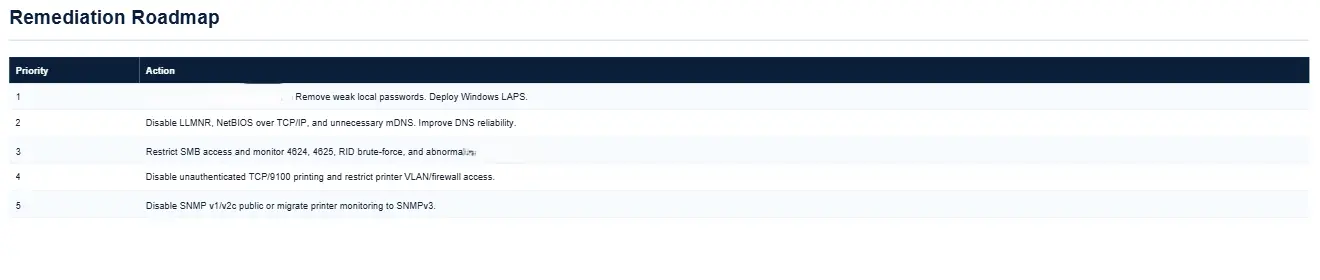
Sanitized penetration testing remediation roadmap showing prioritized security recommendations from an authorized assessment.

What happens after someone gets inside?

Perimeter defenses are vital, but breach assumptions are reality. Our internal testing services assess your architecture from the inside out, exposing vulnerability propagation pathways and proving what an attacker could actually compromise.

Network Segmentation

We evaluate if critical business zones and database environments are isolated from compromised workstation and guest segments.

Identity & Access Control

Rigorous mapping of Active Directory configurations, service account policies, and domain setups to verify role limits.

Privilege Escalation

We attempt to escalate from entry-level access to domain administrator status by uncovering policy oversights and legacy credentials.

Lateral Movement

We simulate how actual adversaries move horizontally from endpoint to endpoint to search for high-value administrative assets.

Data Exfiltration Paths

Identifying if proprietary data, client lists, or codebases can be successfully packed and exfiltrated without triggering alarms.

Detection & Response

We measure how effectively your local logging, EDR systems, and security operations team monitor, flag, and block actions.

The network does not always stop at the wall.

Wireless signals extend far beyond your physical perimeter, presenting a silent invitation to malicious actors. Standard perimeter defenses are blind to over-the-air exploits, rogue access points, and misconfigured encryption protocols. To secure your perimeter, you must extend visibility and control into the airwaves.

Wireless Authentication

Use appropriate WPA3 Enterprise controls where supported and reduce reliance on weak or broadly shared wireless credentials.

Encryption & Configuration

Identify vulnerable cipher suites, retired standards, and shadow SSIDs operating in your airspace.

Network Segmentation

Validate network segmentation so guest and untrusted IoT devices cannot reach critical production systems without an approved business need.

Authorized Access Testing

Regularly simulate rogue client attacks to verify that intrusion detection triggers instantly.

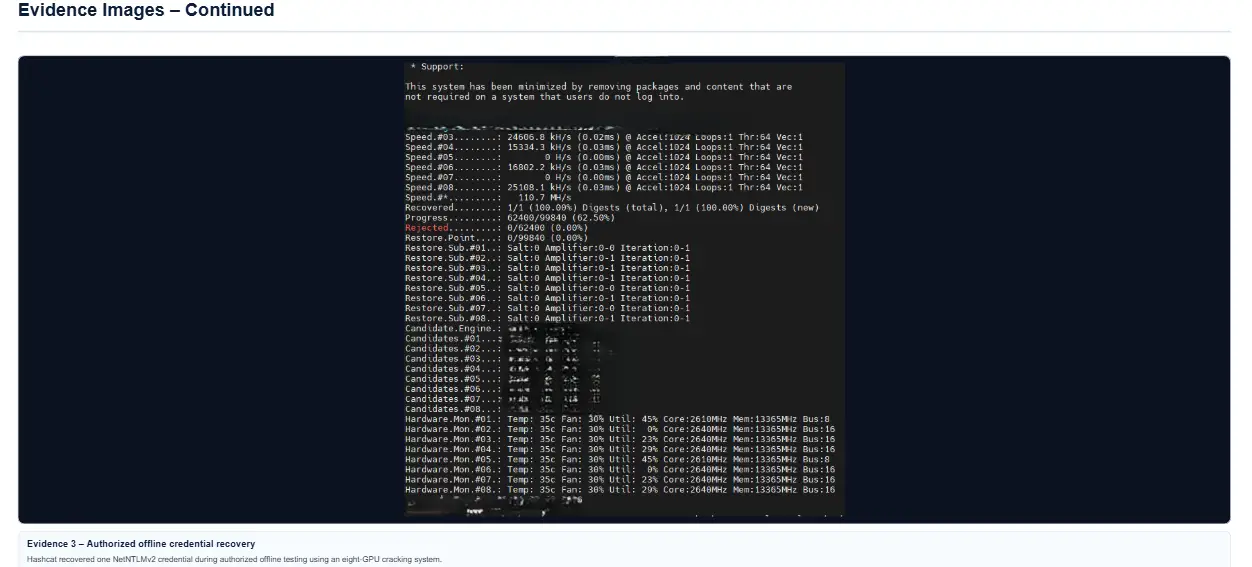
Sanitized terminal evidence from authorized offline credential recovery testing performed during a penetration test.

PRE-ATTACK RECONNAISSANCE

Understand what attackers can learn before the test even begins.

Before launching an active exploit, adversaries silently harvest intelligence from open sources. Our OSINT phase maps your digital footprint, exposing critical leaks and security blind spots exactly as a malicious actor would find them.

Domain & Infrastructure

Deep mapping of your external DNS records, active subdomains, IP ranges, and hosting providers to find forgotten, high-risk assets.

Breach/Credential Exposure

Scanning third-party database breaches and dark web forums for leaked corporate passwords, hashes, and employee credentials.

Employee & Org Information

Gathering public intelligence on key personnel, roles, and profiles to simulate sophisticated, targeted social engineering campaigns.

Brand & Domain Abuse

Identifying lookalike domains, malicious clones, and brand impersonation activities engineered to trick your clients and team.

Publicly Exposed Technology

Locating unprotected cloud storage, legacy staging endpoints, and active databases left open to the public internet.

Third-Party Exposure

Exposing architectural risks in supplier integrations, joint ventures, and inadvertent code leaks in public repositories.