Serving Texas + Nationwide

STUDENT & INTERNSHIP PROGRAMS

Help students experience what technical work actually feels like.

Our student and internship programs combine hands-on technology with realistic projects, professional expectations, communication, documentation, and problem solving.

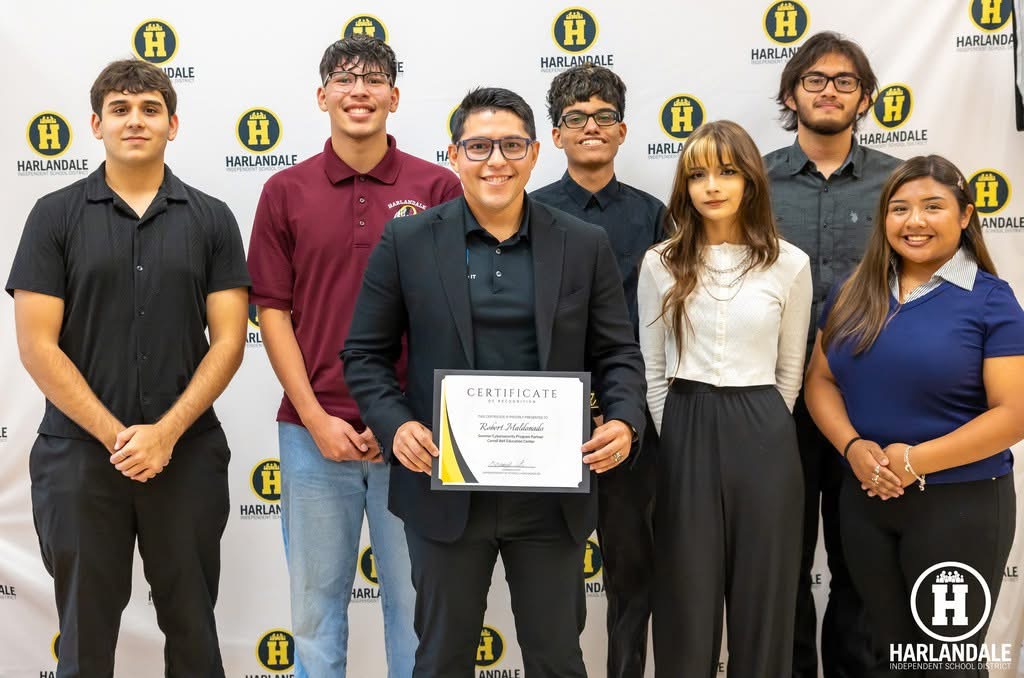
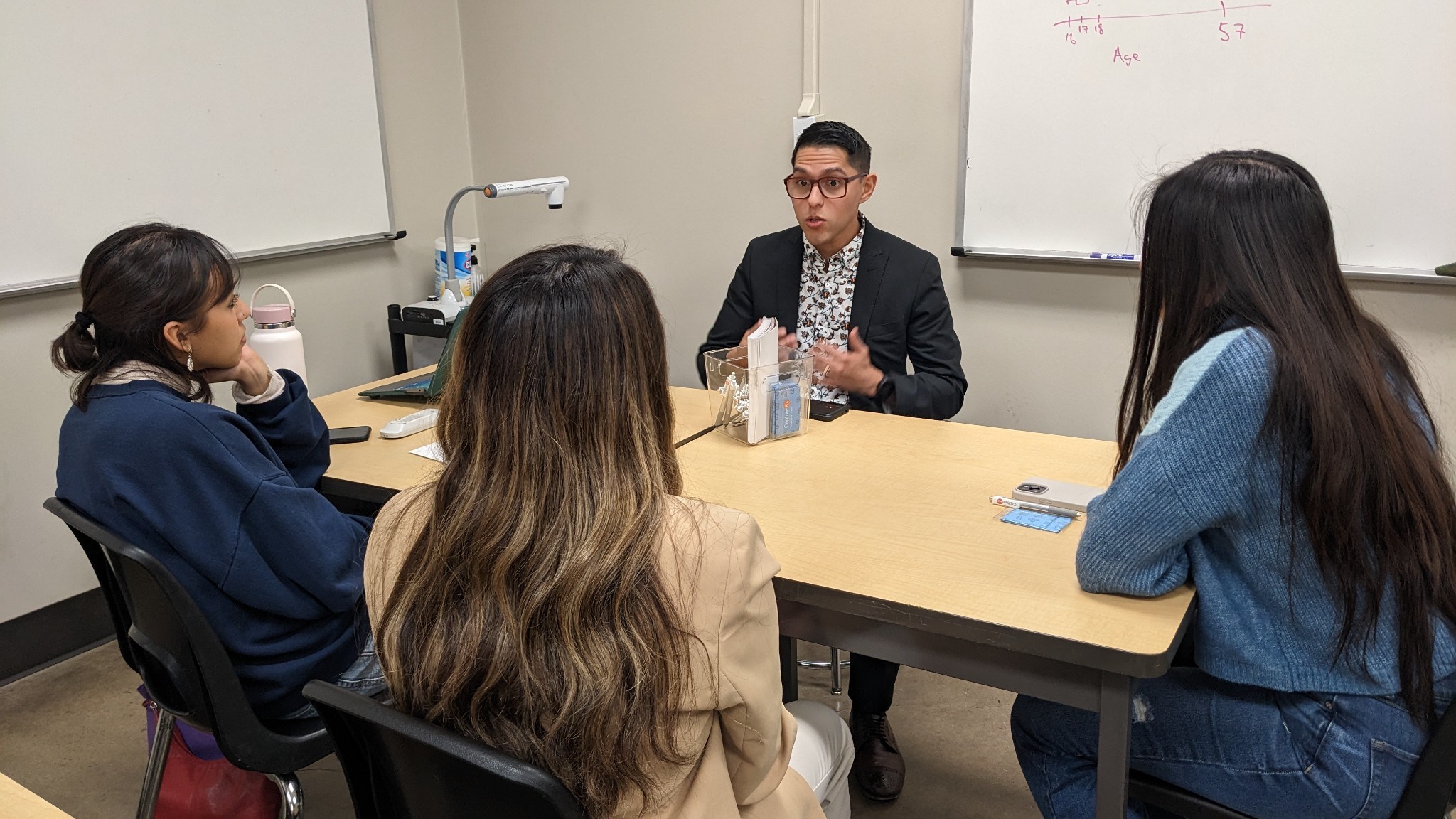
Students participating in a We Can Change IT program and receiving recognition for their work.

Knowing how to complete the lab is different from knowing how to do the work.

WCCIT Student Programs connect guided learning with realistic technical tasks, troubleshooting, documentation, teamwork, and professional communication in controlled environments.

Technical Skills

Practice with Windows, networking, command-line tools, cloud concepts, security monitoring, and other technologies used in the program.

Problem Solving

Learn how to break down unfamiliar problems, review logs, test assumptions, troubleshoot connectivity, and document what you tried.

Professional Skills

Build professional habits around documentation, planning, evidence collection, teamwork, and clear communication.

Career Context

Understand why technical requirements exist and how individual system changes support a larger project or organizational goal.

STUDENT EMPOWERMENT

Give students work to own—not just instructions to follow.

01

Check In

Check in, review the day's goals, raise questions, and understand what needs to be completed.

02

Receive a Task

Receive a realistic technical task with a defined goal, then determine the steps needed to complete it.

03

Research & Plan

Review requirements and documentation, research unfamiliar concepts, and make a simple plan before beginning the work.

04

Complete the Work

Complete the technical work, troubleshoot issues, test changes, and adjust your approach as needed.

05

Document & Submit

Document what you changed, explain key decisions, attach evidence, and submit the work for review.

06

Review & Reflect

Review feedback, discuss what worked and what did not, make corrections, and reflect on what you learned.

Assignments can feel like the work students may encounter later.

Practice with realistic technical assignments that reinforce cybersecurity, networking, systems, software, and documentation skills.

Vulnerability Remediation

Review lab assets, prioritize vulnerability findings, and practice remediation and verification workflows.

Security Investigation

Review logs and alerts, investigate suspicious activity in the lab, and summarize findings and recommended next steps.

Network Troubleshooting

Troubleshoot connectivity, review addressing and routing, test DNS, and document the cause of network issues.

System Administration

Work with Active Directory, Windows Server configuration, user access, and basic system administration tasks.

Security Hardening

Practice system hardening, access-control changes, firewall rules, and validation of security settings in the lab.

Dashboard & Reporting

Build and interpret dashboards that summarize lab telemetry, security events, and system activity.

Software & Automation

Use scripting and automation to reduce repetitive configuration and data-handling tasks.

Documentation

Create diagrams, notes, runbooks, and concise technical summaries that explain the work completed.

Core Professional Competency

Technical ability gets stronger when students can explain their work.


Communication

Explain technical work clearly to peers, instructors, clients, and non-technical audiences.

Documentation

Write readable notes, instructions, evidence, diagrams, and technical documentation others can follow.

Time Management

Plan work, prioritize tasks, manage limited time, and communicate when something is blocked or needs more time.

Problem Solving

Break unfamiliar problems into smaller questions that can be researched, tested, and verified one at a time.

Teamwork

Review work respectfully, share responsibilities, resolve differences, and collaborate toward a common result.

Presentation

Demonstrate completed work, answer questions, explain decisions, and present technical results to an audience.

Create structure around the student experience.

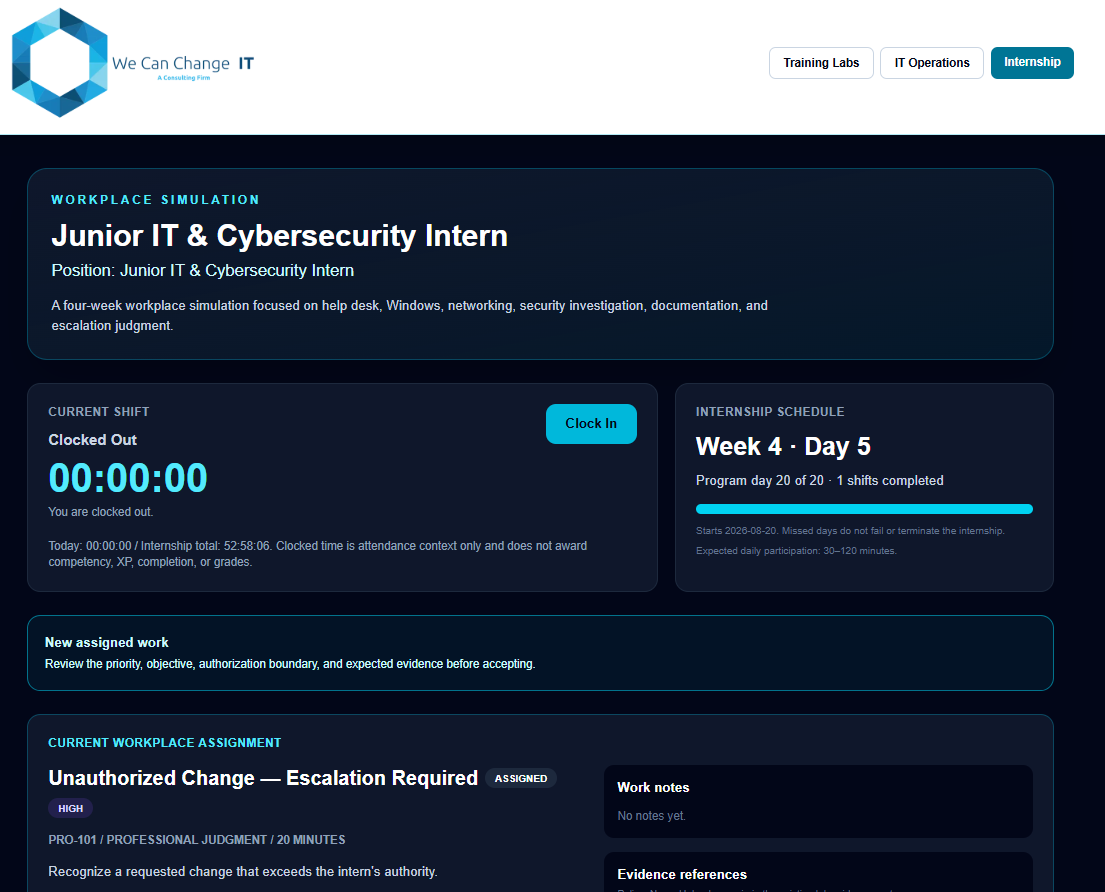
The Internship Simulator gives students a structured way to track time, receive tasks, submit evidence, and receive instructor feedback.

Clock In / Out

Students log time spent on training and active development.

Task Assignments

Receive and manage customized technical tasks.

Work Evidence

Attach technical documentation and proof of work.

Task History

Keep a clear history of assigned and completed tasks.

Instructor Oversight

Instructor and mentor visibility into student tasks and submitted work.

Feedback

Provide feedback so students can revise their work and improve over time.

We Can Change IT Internship Simulator showing clock-in status, a four-week schedule, and a workplace cybersecurity assignment.

EXAMPLE WORK SESSION

What a student work session might look like

9:00 AM

Check In

Review the session goals, ask questions, and identify any blockers before starting.

9:10 AM

Task Brief

Read the task brief, identify the expected outcome, and review the systems or tools involved.

9:20 AM

Technical Work

Work through the assigned technical task in the controlled environment, testing and troubleshooting as you go.

10:20 AM

Document

Record what was changed, capture evidence, and add notes that another person could understand.

10:40 AM

Review

Submit the work for review, respond to feedback, and correct issues that were identified.

11:00 AM

Next Assignment

Close out the task, record the result, and move to the next assignment when the work is complete.

* Note: Times and tasks are illustrative of typical technical workflows and may vary depending on project requirements and specialization tracks.

ADVANCED HANDS-ON EXPERIENCE

Students can contribute to larger technical projects—not just isolated exercises.

Move beyond basic exercises with guided scenarios that combine vulnerability management, monitoring, networking, endpoint security, documentation, and defensive security concepts.

Vulnerability Management

Assess and prioritize vulnerabilities in controlled lab systems, then practice remediation and validation.

Threat Hunting

Use logs and security telemetry to investigate indicators, unusual activity, and possible threats in controlled scenarios.

Security Monitoring

Review traffic, endpoint telemetry, and alerts to practice basic monitoring, investigation, and escalation decisions.

Network Security

Practice VLAN segmentation, firewall rules, addressing, and other network-security controls in the lab.

Website Hardening

Review and harden web applications in controlled labs while learning about common web vulnerabilities and defensive practices.

Endpoint Security

Work with endpoint-security agents and telemetry to understand device visibility, alerts, and response workflows.

Red Team / Blue Team

Practice scoped red-team and blue-team scenarios in isolated lab environments with clear rules and defensive learning objectives.

Security Documentation

Create security notes, diagrams, checklists, response documentation, and reports that communicate what was observed and changed.

Technology careers extend beyond cybersecurity.

While cybersecurity remains a vital pillar, the digital architecture of modern enterprises relies on specialized disciplines to build, connect, power, and automate infrastructure.

Infrastructure

Networking

Software

Automation

Students should leave knowing how to talk about what they did.

Students are encouraged to explain the problem, their approach, the work they completed, and what they learned so technical experience can be documented and discussed clearly.

The Problem

Describe the technical problem or risk in clear language and explain why it matters.

The Approach

Explain the research, planning, tools, and steps used to approach the task.

The Work

Summarize the configuration, scripting, troubleshooting, testing, or documentation completed during the assignment.

The Result

Show the result with screenshots, logs, notes, validation steps, or other evidence that demonstrates what changed or what was learned.

Sanitized Projects Note: All portfolio presentations are strictly sanitized. Any simulated data, company credentials, IP, or network vulnerabilities are entirely generic and adhere strictly to enterprise disclosure frameworks.

Students get ownership without being left on their own.

We provide structured boundaries, expert guardrails, and persistent mentorship so every learner can navigate complex technical landscapes with absolute confidence.

Defined Scope

Curated projects and clear boundaries help students stay aligned with achievable, high-impact milestones.

Clear Expectations

Transparent rubrics, weekly checklists, and goal setting remove all guesswork from day one.

Instructor Visibility

Real-time dashboards, commit logs, and code oversight keep mentors informed of student progress.

Technical Support

Dedicated debugging hours, documentation, and active chat support quickly clear technical hurdles.

Review & Feedback

Consistent peer evaluation and industry-standard feedback prepare students for modern work environments.

FOUNDATIONAL CAREER HABITS

Professional habits are part of the curriculum.

Technical skills get you the interview, but professional execution builds your career. We integrate these 10 industry-proven habits into every project, guiding you toward ultimate workplace readiness.

Show up prepared

Arrive with the workspace setup, required documentation, and a focused mindset ready to execute from minute one.

Read task

Read the scope carefully, identify the expected outcome, and understand why the task matters before beginning the work.

Ask questions

Curiosity is a critical technical skill. Asking clear, smart questions saves hours of wasted effort and shows high engagement.

Protect credentials

Security is built into our core. Never expose API keys, database URLs, or access tokens in code repositories.

Stay in scope

Focus on the objective. Avoid side-quests and feature creep; deliver the perfect implementation of the agreed scope first.

Document changes

Your future self and team will thank you. Write clear commits, clean inline documentation, and comprehensive readmes.

Communicate blockers

Don't sit on a problem until it's too late. Flag hurdles early and propose potential paths forward so we can help.

Test work

Take absolute pride in your craftsmanship. Thoroughly verify your deployment against negative test cases before claiming complete.

Explain work

Be ready to present. Articulating your architecture and thought processes clearly doubles your impact as an engineer.

Learn from mistakes

Mistakes are valuable data points. Reflect, refine, and embrace feedback to emerge stronger with every iteration.
Flexible Program Models

Build the experience around the program you already have.

Adapt our professional-grade tech platform to match your timeline, cohort sizes, and unique educational requirements. No complex restructuring necessary.

Summer Programs

Accelerate technical learning with high-impact cohorts. Ideal for intensive multi-week bootcamps, technical deep-dives, and dedicated capstone projects.

Classroom Integration

Seamlessly embed developer sandboxes, standardized coding libraries, and auto-evaluated challenges directly into your semester-long courses.

Internship Simulations

Bridge the gap between theory and execution. Give your students simulated workplace tasks, code reviews, and industry workflows.

Workforce Development

Directly align program outputs with local employer needs. Scale career-ready talent pathways, employer networks, and tracking metrics.

Hands-On Experience

What student project work can look like

Explore real-world technical assignments completed by our graduates, demonstrating practical mastery over modern cybersecurity and infrastructure environments.

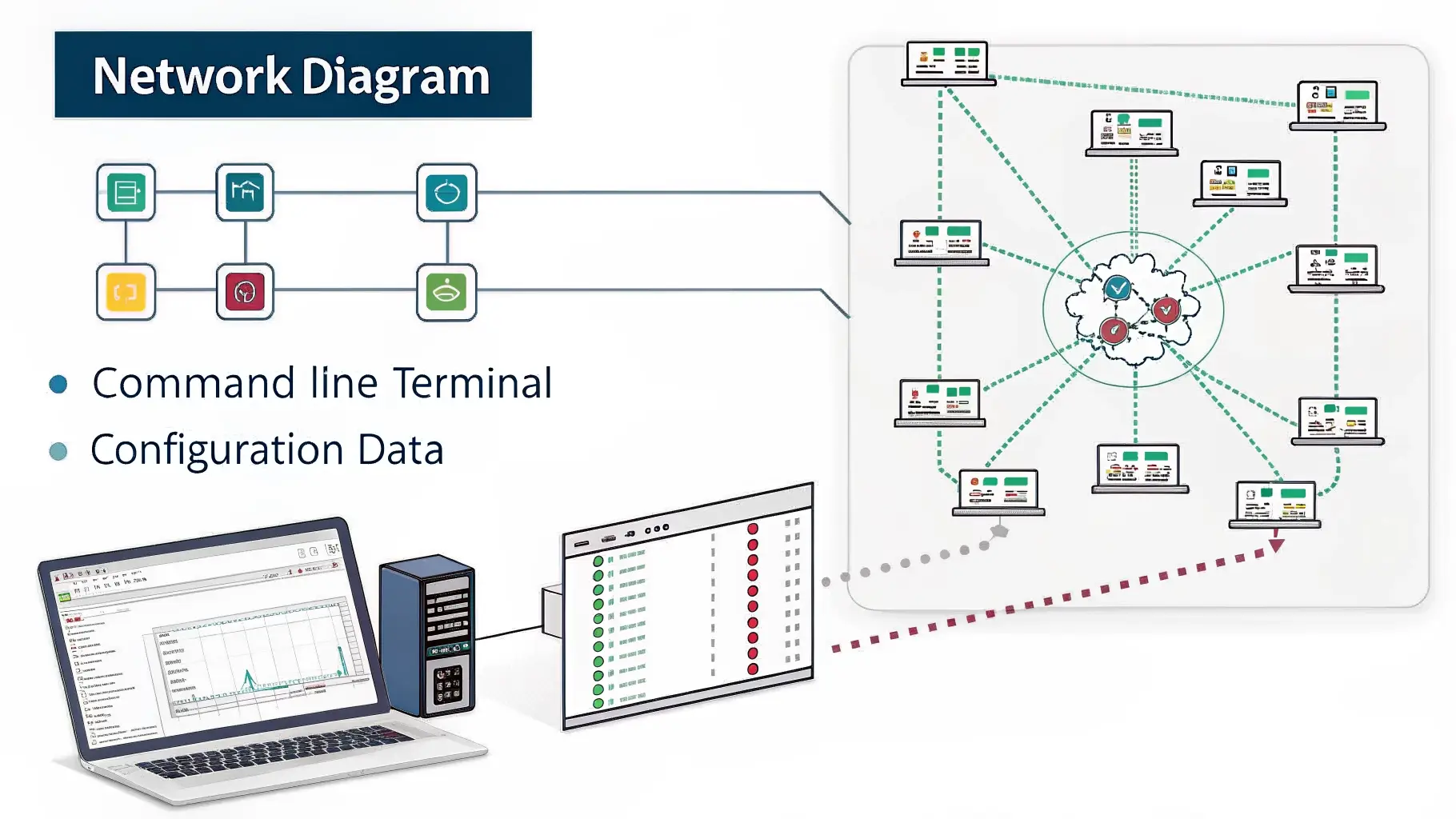
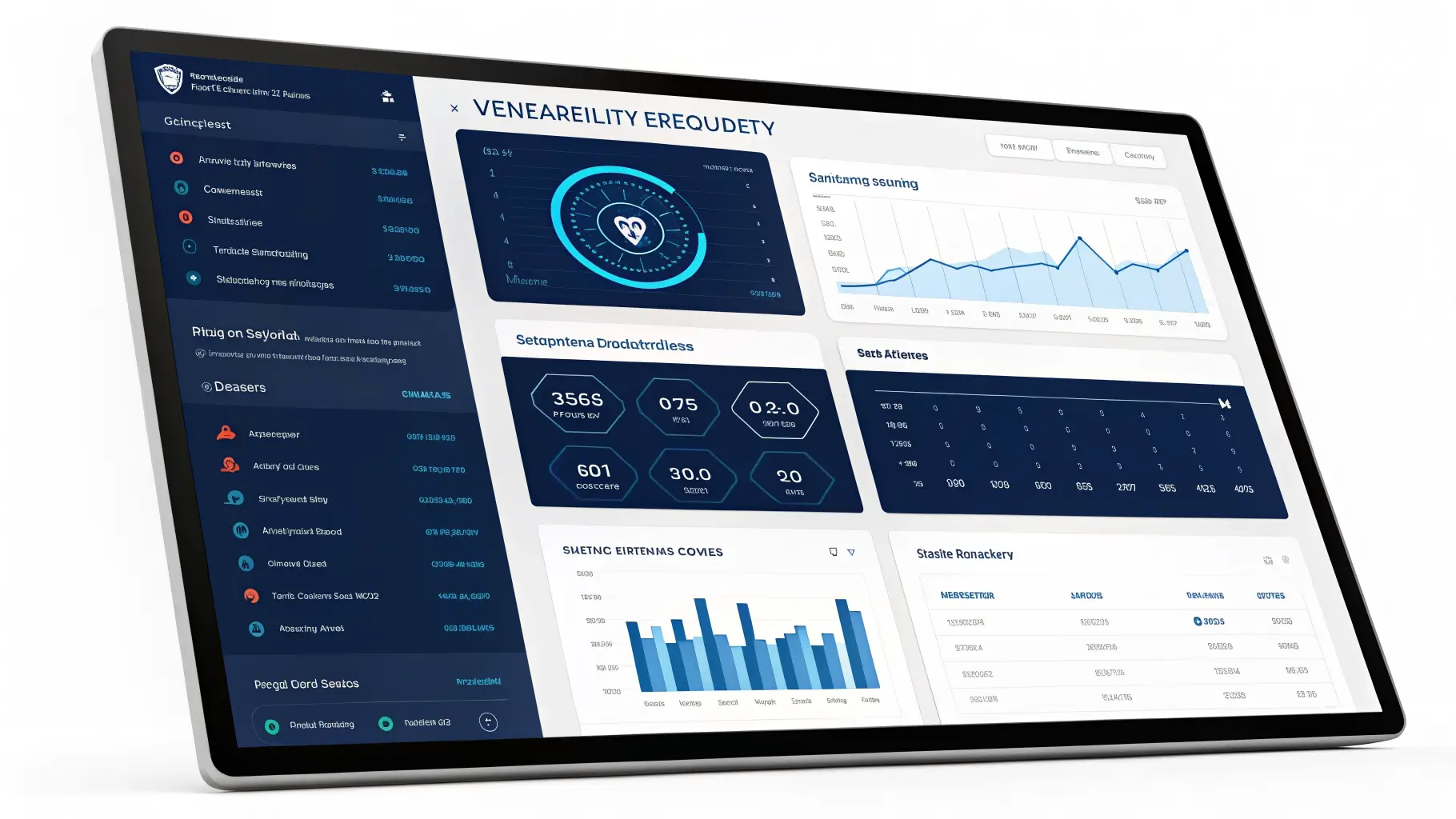
Vulnerability Remediation Project dashboard showing threat mitigation metrics
Cybersecurity Audit

Vulnerability Remediation Project

Students perform automated scanning, manually verify exploits, prioritize system risks, and patch legacy vulnerabilities in simulated corporate network environments.

View Case Study
Threat investigation team studying alert patterns on a digital workspace
Incident Response

Threat Investigation Project

Working in simulated security operations centers (SOC), students trace real active exploits, map digital evidence, and devise complex tactical response plans.

View Case Study
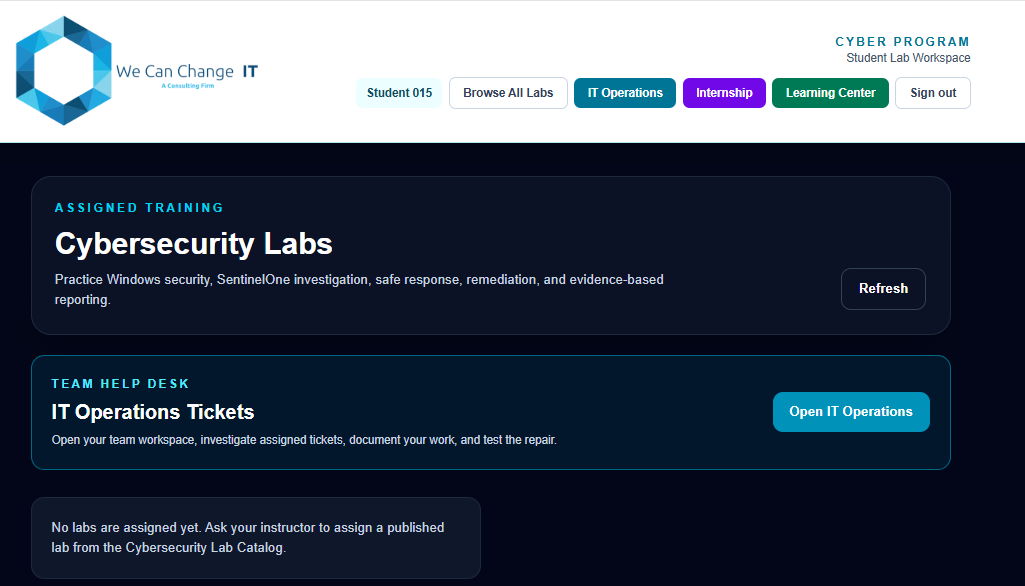
We Can Change IT student cyber program portal showing assigned cybersecurity labs, IT Operations tickets, internship, and learning-center access.
Systems Engineering

Infrastructure & Network Project

Designing and structuring highly secure internal network systems using segmentations, modern access management policies, and cloud infrastructure patterns.

View Case Study

Students doing the work.

WCCIT students work together on realistic technical scenarios involving networking, cybersecurity, systems, and hardware in controlled training environments.

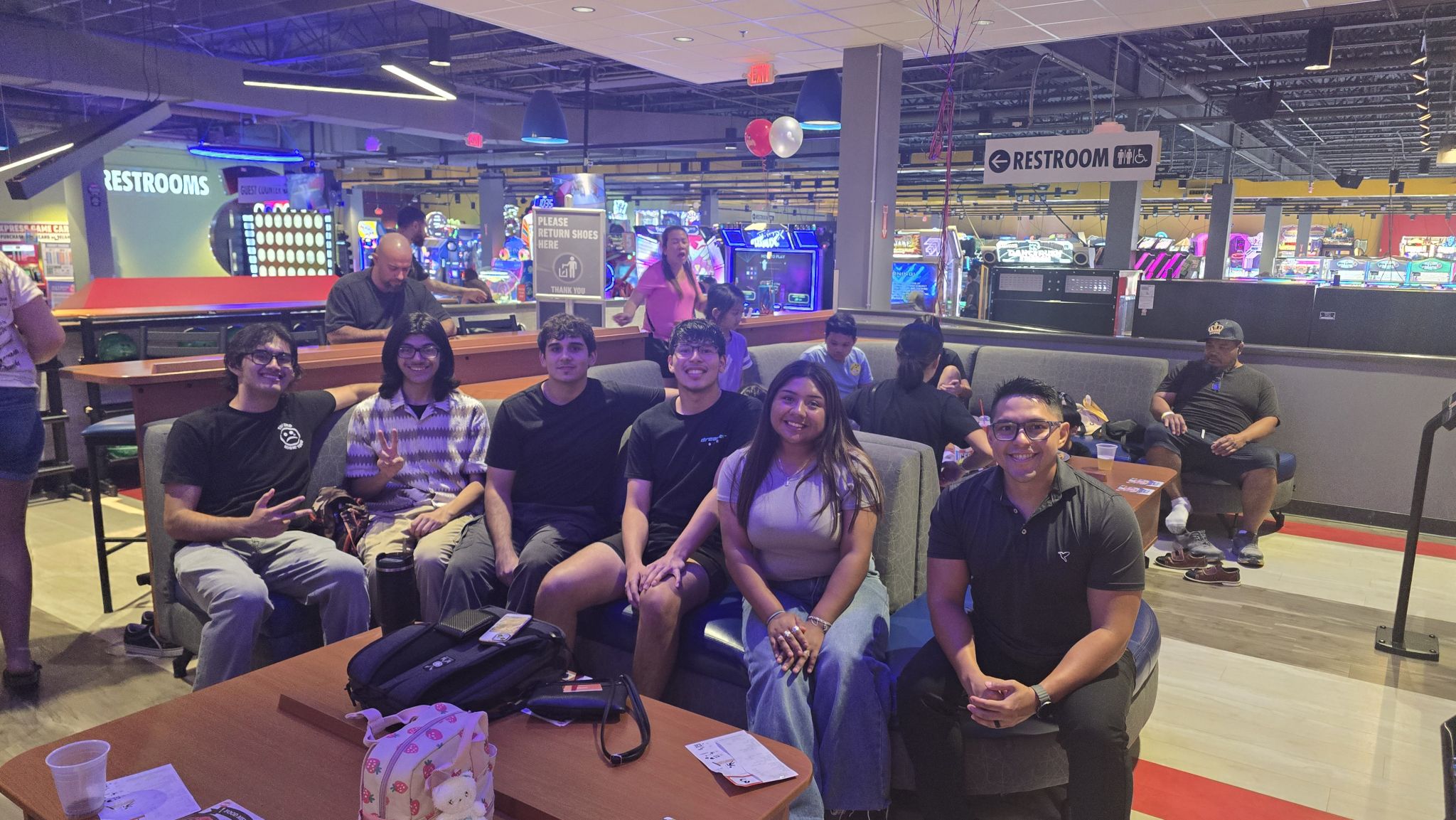
We Can Change IT onsite student internship program visit.
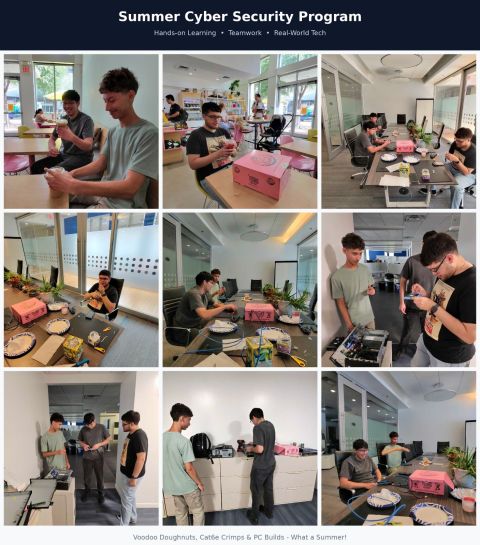
Students participating in a We Can Change IT summer internship and hands-on technology program.
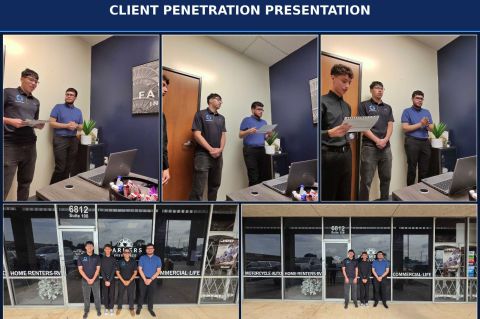
Client penetration testing presentation during a We Can Change IT student internship program.
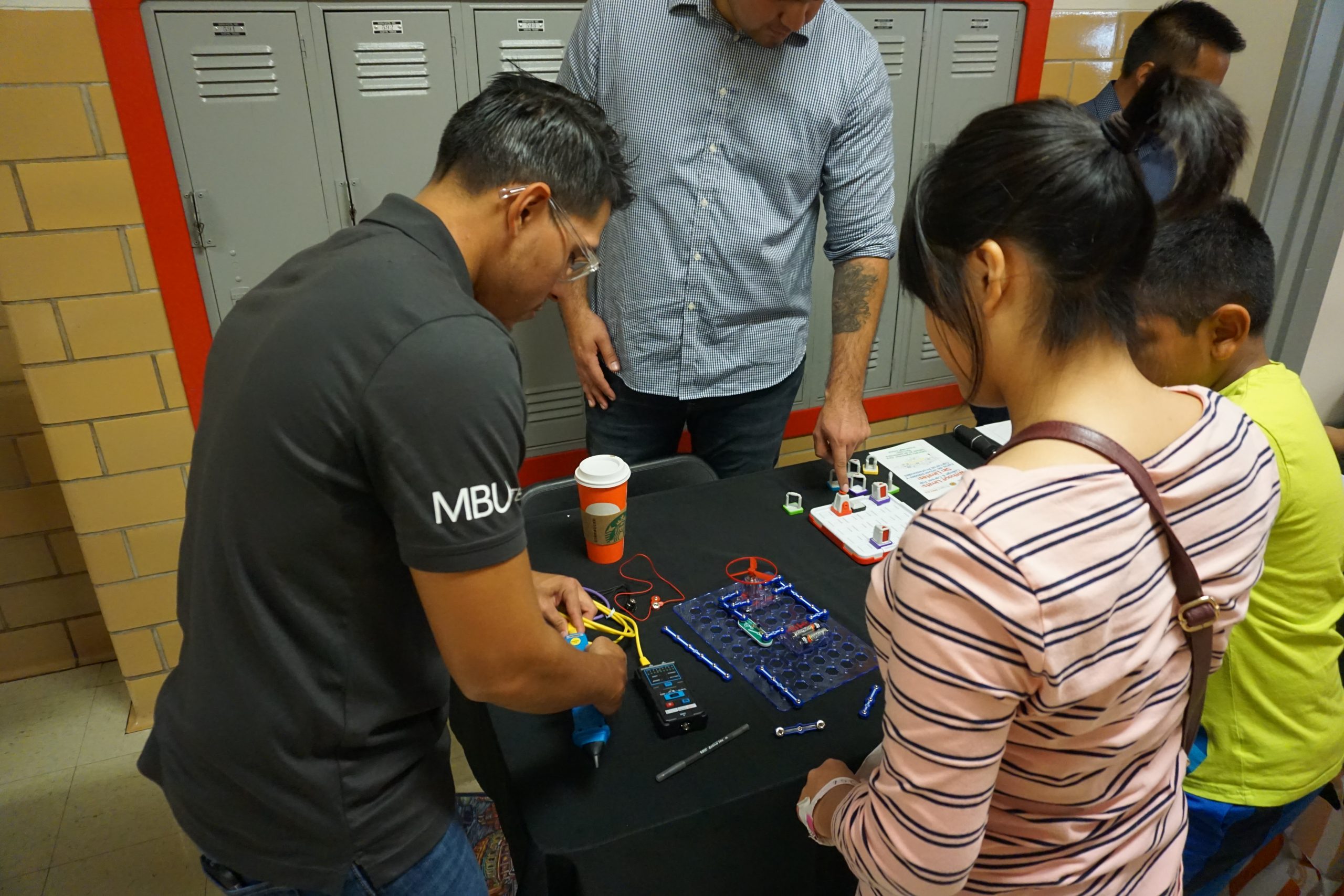
Student hands-on technology activity during a We Can Change IT workshop.
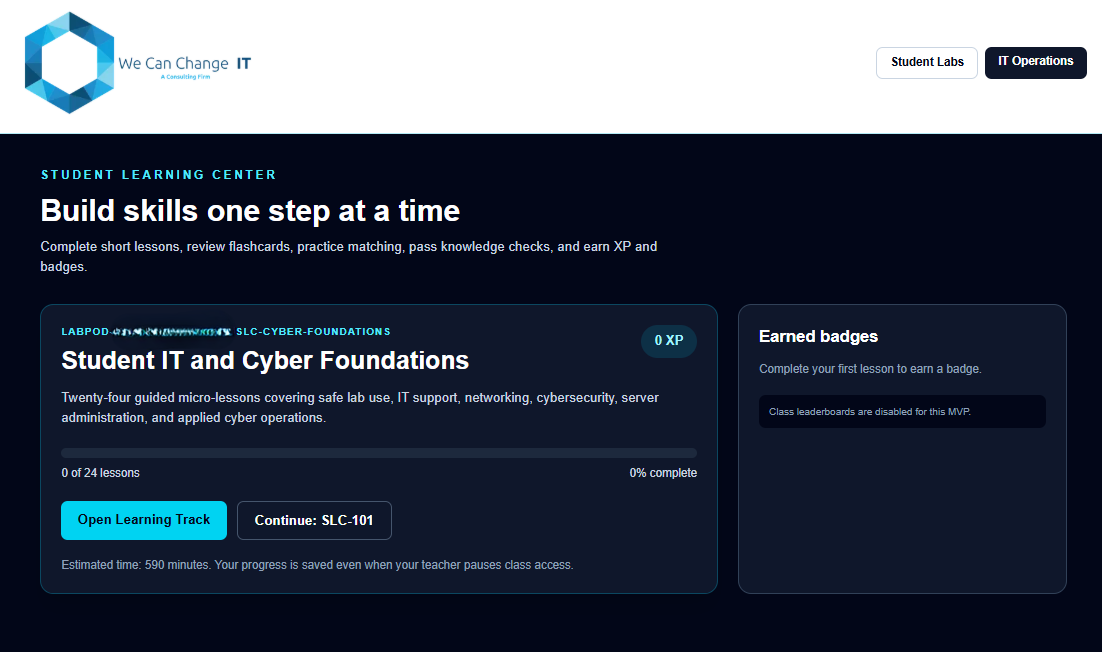
We Can Change IT Student Learning Center showing guided IT and cybersecurity lessons, progress, and earned badges.
Hands-on technology mentoring and collaboration during a We Can Change IT program.
Targeted Education Solutions

Built for organizations preparing students for what comes next.

Empower your educational community with robust technological frameworks, hands-on learning pathways, and industry-standard training tools optimized for current and future workforce demands.

High Schools & CTE

Empower secondary students with foundations in tech. Deliver modern career technical paths that map to industry certificates.

School Districts

Scale standardized technology education across multiple campuses with central deployment, tracking, and analytics dashboards.

Colleges & Universities

Elevate technical degrees with virtual labs, practical sandbox environments, and rigorous assessments that prove job readiness.

Workforce & Community

Catalyze career pivots with targeted upskilling initiatives, vocational technology bootcamps, and accessible adult learning modules.

STUDENT-CENTRIC ECOSYSTEM

Build the experience around the student.

Cyber Labs

Immersive, cloud-based environments where students confront real-world security scenarios and build practical, hands-on muscle memory.

Explore Labs

Educator Training

Empower faculty with industry-standard resources, customizable modules, and sandbox platforms to lead confidently on cybersecurity frontiers.

View Education Programs

Workshops & Workforce Development

Hands-on workshops and workforce development experiences that connect technical concepts with practical, career-relevant skills.

Explore Workshops

Want students solving real technology problems?

Equip your classrooms with authentic technical experiences. Bring real-world cybersecurity, system administration, and software engineering projects directly to your high school or college curriculum.